Summary:
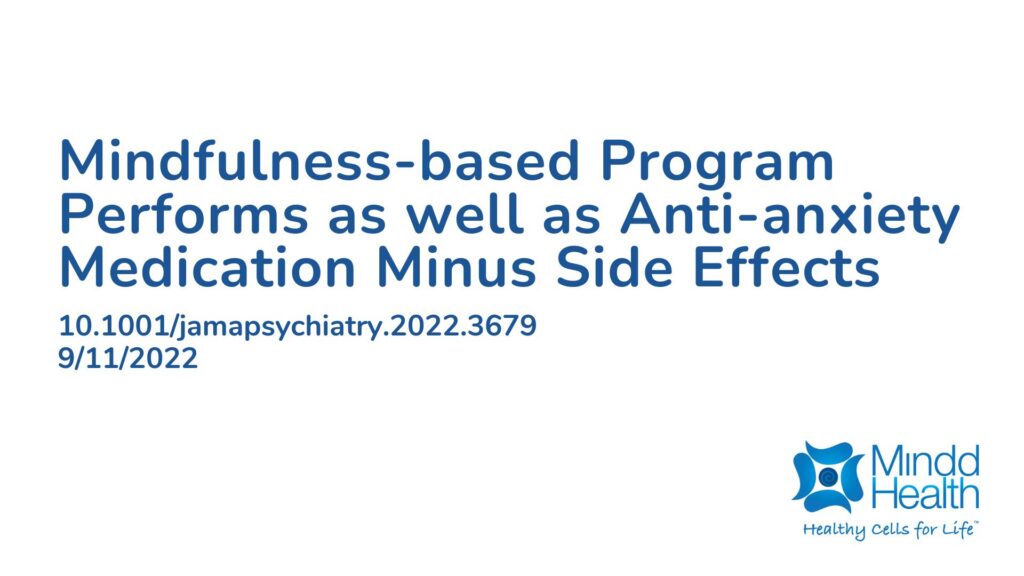
Anxiety disorders affect hundreds of millions of people worldwide and are linked to significant distress, impaired functioning and increased suicide risk. Although treatments exist, many individuals cannot access them, do not tolerate them, or prefer to avoid them. Concerns about medication side effects, high discontinuation rates and limited availability of trained cognitive‑behavioural therapists contribute to these barriers. These challenges have increased interest in evidence-based alternative approaches. Mindfulness‑based interventions have become more popular and are viewed as less stigmatising than conventional psychiatric treatments. Research has shown that mindfulness practices can reduce anxiety symptoms. However, no trial has directly compared a standardized mindfulness intervention with a first‑line pharmacological treatment for anxiety disorders. This study is a randomized clinical trial which evaluated whether mindfulness‑based stress reduction could achieve outcomes comparable to escitalopram, a commonly prescribed medication for anxiety. Adults with diagnosed anxiety disorders were randomly assigned to either an eight‑week mindfulness program or escitalopram. Anxiety severity was assessed by blinded evaluators at baseline and follow‑up visits. The results showed that both treatments produced meaningful reductions in anxiety symptoms. Adverse events were far more common in the medication group, and a small proportion of participants discontinued escitalopram because of side effects, whereas no mindfulness participants withdrew for this reason. Overall, this randomized clinical trial found that a standardized mindfulness‑based intervention was as effective as escitalopram for reducing anxiety severity, suggesting that mindfulness‑based stress reduction may serve as a viable first‑line treatment option for anxiety disorders.
Read the Complete Article >
Abstract:
Anxiety disorders are common, highly distressing, and impairing conditions. Effective treatments exist, but many patients do not access or respond to them. Mindfulness-based interventions, such as mindfulness-based stress reduction (MBSR) are popular and can decrease anxiety, but it is unknown how they compare to standard first-line treatments. Objective: To determine whether MBSR is noninferior to escitalopram, a commonly used first-line psychopharmacological treatment for anxiety disorders. Design, Setting, and Participants: This randomized clinical trial (Treatments for Anxiety: Meditation and Escitalopram [TAME]) included a noninferiority design with a prespecified noninferiority margin. Patients were recruited between June 2018 and February 2020. The outcome assessments were performed by blinded clinical interviewer at baseline, week 8 end point, and follow-up visits at 12 and 24 weeks. Of 430 individuals assessed for inclusion, 276 adults with a diagnosed anxiety disorder from 3 urban academic medical centers in the US were recruited for the trial, and 208 completed the trial. Interventions: Participants were 1:1 randomized to 8 weeks of the weekly MBSR course or the antidepressant escitalopram, flexibly dosed from 10 to 20 mg. Main Outcomes and Measures: The primary outcome measure was anxiety levels as assessed with the Clinical Global Impression of Severity scale (CGI-S), with a predetermined noninferiority margin of −0.495 points. Results: The primary noninferiority sample consisted of 208 patients (102 in MBSR and 106 in escitalopram), with a mean (SD) age of 33 (13) years; 156 participants (75%) were female; 32 participants (15%) were African American, 41 (20%) were Asian, 18 (9%) were Hispanic/Latino, 122 (59%) were White, and 13 (6%) were of another race or ethnicity (including Native American or Alaska Native, more than one race, or other, consolidated owing to low numbers). Baseline mean (SD) CGI-S score was 4.44 (0.79) for the MBSR group and 4.51 (0.78) for the escitalopram group in the per-protocol sample and 4.49 (0.77) vs 4.54 (0.83), respectively, in the randomized sample. At end point, the mean (SD) CGI-S score was reduced by 1.35 (1.06) for MBSR and 1.43 (1.17) for escitalopram. The difference between groups was −0.07 (0.16; 95% CI, −0.38 to 0.23; P = .65), where the lower bound of the interval fell within the predefined noninferiority margin of −0.495, indicating noninferiority of MBSR compared with escitalopram. Secondary intent-to-treat analyses using imputed data also showed the noninferiority of MBSR compared with escitalopram based on the improvement in CGI-S score. Of patients who started treatment, 10 (8%) dropped out of the escitalopram group and none from the MBSR group due to adverse events. At least 1 study-related adverse event occurred for 110 participants randomized to escitalopram (78.6%) and 21 participants randomized to MBSR (15.4%). Conclusions and Relevance: The results from this randomized clinical trial comparing a standardized evidence-based mindfulness-based intervention with pharmacotherapy for the treatment of anxiety disorders found that MBSR was noninferior to escitalopram.
Article Publication Date: 9/11/2022
DOI: 10.1001/jamapsychiatry.2022.3679